
Developed material
This link provides access to all developed material. The resources will be organized into folders by language, making them easy to download. Each folder will be updated throughout the project as new material is completed and translations are finalized.
Below you can read more about the material we have developed.

Psychosocial Training Course – Online
This online course provides healthcare professionals with foundational knowledge and practical skills in body image, equity, diversity, and inclusion, as well as person-centered care. The second part of the training provides practical strategies for supporting individuals aged 10 and older with visible differences, particularly those affected by social anxiety. It is based on the principles of cognitive behavioral therapy and acceptance and commitment therapy.
The course is accredited by the CPD Certification Service, and upon successful completion, participants receive a certificate granting 6 CPD hours.
This online course is currently offered in English only.
Course Overview – Digitalisation
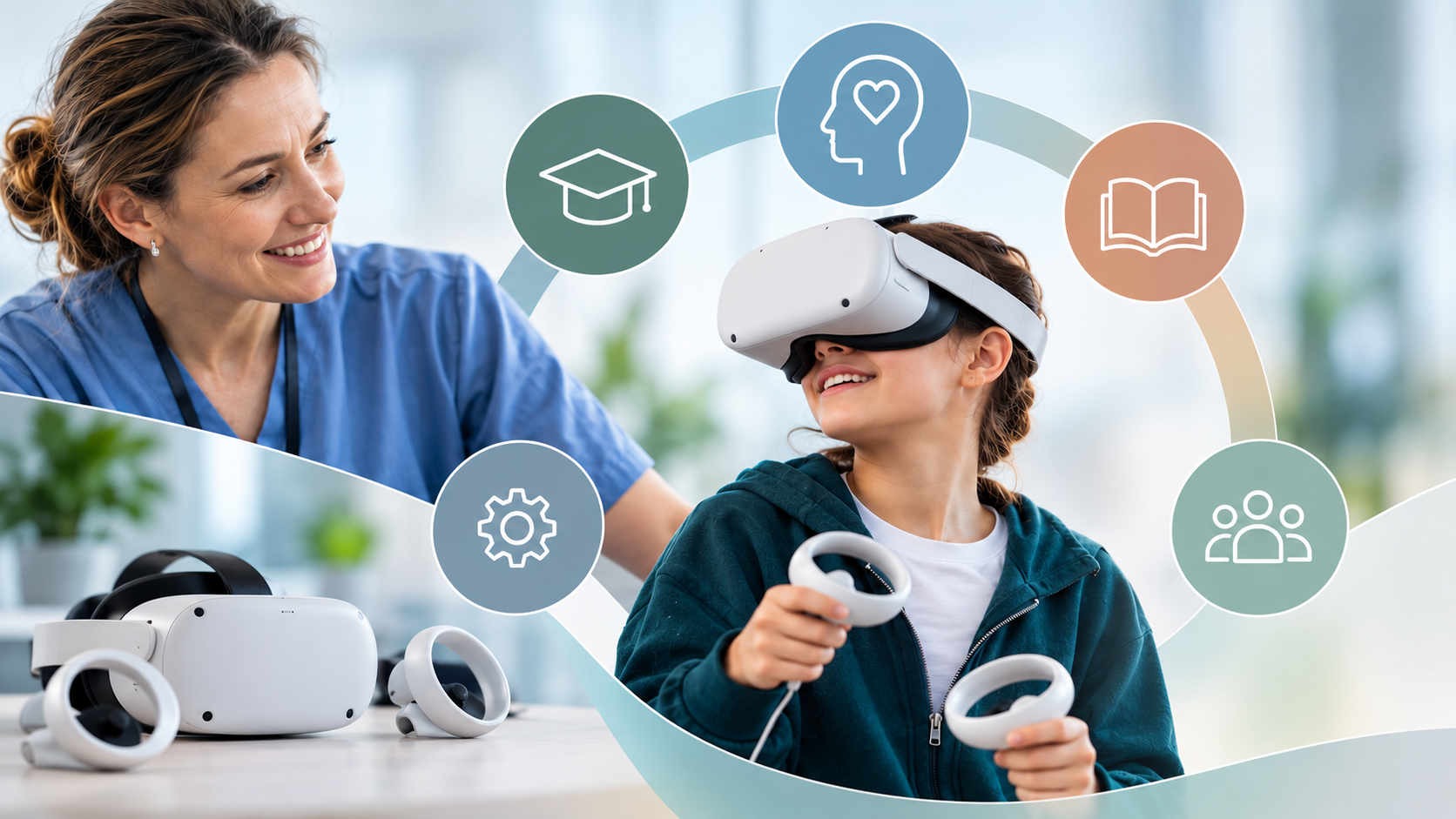
As part of the DEDICATION project, the Digitalisation training materials have been substantially expanded beyond the scope originally envisaged. Rather than developing only introductory material on digitalisation and the use of Virtual Reality (VR), the partnership has created a comprehensive 1 ECTS micro-course (29 hours) covering digitalisation in healthcare, practical VR competence, use of the Smile Proud application, technical troubleshooting, communication and safe implementation in clinical practice. The course is structured around four interconnected areas. Participants first explore digitalisation in healthcare settings, including the opportunities and challenges associated with digital technologies, person-centred care and blended care. They then receive extensive hands-on training in the setup and operation of VR equipment, including physical preparation, connectivity, controller use, application management and troubleshooting. The training is designed to enable participants to become sufficiently confident and technically prepared to use the equipment safely and independently.
Participants are subsequently introduced to the Smile Proud VR application and learn how to use it from both the young person's and healthcare professional's perspective. Through guided practical training, they explore the three Smile Proud scenarios – Social Soccer, Cafeteria Calculations and Cyberbully Bugs – and become familiar with the structure, navigation, decision points and facilitator functions of the application. A further component addresses communication, emotional safety and professional responsibility when using VR with children and young people. Through lectures, role-play, simulation and reflective activities, participants practise how to introduce VR, recognise and respond to signs of distress, support safe participation, pause or stop an experience when appropriate, and communicate effectively with children, caregivers and colleagues. Throughout the Digitalisation course, technology is presented as a tool to support, rather than replace, professional judgement, empathy and person-centred practice. Particular attention is given to privacy, consent, accessibility, ethical practice and Equity, Diversity and Inclusion (EDI). The resulting Digitalisation training therefore represents a broader and more comprehensive educational output than originally planned within DEDICATION. By expanding the material into a structured 1 ECTS micro-course combining theoretical learning, self-directed study, practical VR training, troubleshooting, guided use of Smile Proud, simulation and reflective learning, the project has generated additional educational value and a sustainable resource for the training of healthcare professionals.As part of the DEDICATION project, the training materials on digitalization have been developed and significantly expanded beyond the scope originally planned. Instead of merely producing introductory materials on digitalization and the use of Virtual Reality (VR), the partnership has developed a comprehensive microcourse worth 1 ECTS (29 hours). The course covers digitalization in healthcare, practical skills in using VR, use of the Smile Proud application, technical troubleshooting, communication, and safe implementation in clinical practice.
The course is structured around four interconnected areas. Participants first explore digitalization in healthcare, including the opportunities and challenges associated with digital technology, person-centered care, and blended care. This is followed by comprehensive hands-on training in the installation and use of VR equipment, including preparation of the equipment and physical environment, setup, use of controllers, operation of the application, and troubleshooting. The training aims to help participants develop sufficient confidence and technical competence to use the equipment safely and independently.
Participants are then introduced to the Smile Proud VR application and learn how to use it from both the child’s or young person’s perspective and that of the healthcare professional. Through supervised practical training, participants explore the three Smile Proud scenarios—Social Soccer, Cafeteria Calculations, and Cyberbully Bugs—and familiarize themselves with the application’s structure, navigation, decision points, and features for the professional supervising its use.
Another component of the training addresses communication, emotional safety, and professional responsibility when using VR with children and youth. Through lectures, role-playing, simulations, and reflection exercises, participants practice how to introduce VR, how to identify and manage signs of discomfort or stress, how to support safe participation, when a VR experience should be paused or ended, and how to communicate with children, guardians, and colleagues in a clear and professional manner.
Throughout the course, digital technology is presented as a tool designed to support, not replace, professional judgment, empathy, and person-centred care. Special attention is given to privacy, informed consent, accessibility, ethical considerations, and Equity, Diversity, and Inclusion (EDI).
The developed training program in digitalisation thus constitutes a more comprehensive educational outcome than what was originally planned within DEDICATION. By developing the material into a structured 1 ECTS micro-course that combines theoretical learning, self-study, practical VR training, troubleshooting, guided use of Smile Proud, simulation, and reflective learning, the project has created significant added value and a sustainable educational resource for the training of healthcare professionals.

Course overview - psychosocial
This 1 ECTS micro-course examines the interplay between body image, visible differences, psychosocial well-being, and health outcomes in children, young people, and their families. Participants will gain in-depth knowledge of how body image develops, the consequences of dissatisfaction and stigma, and the everyday challenges associated with living with visible differences, including the impact on mental health, education, and quality of life.
The course highlights how the media, peers, family, and broader social health determinants affect experiences and health, while integrating principles of equality, diversity, and inclusion (EDI) and intersectionality to highlight and understand health differences. By combining theory and practice, the course provides participants with knowledge, empathy, and person-centered approaches to offer inclusive, compassionate, and needs-based care to individuals and families affected by visible differences and body image issues.